PCBOven — WiFi Reflow Controller
by: Hugo Abondano, Tomás Ospina, Juan Rodríguez, Nicolás Ospitia.
Overview
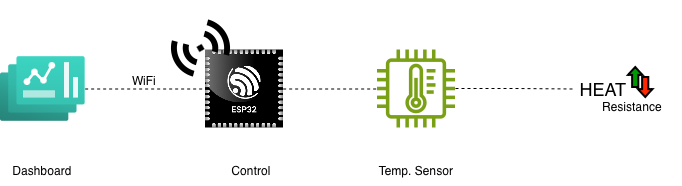
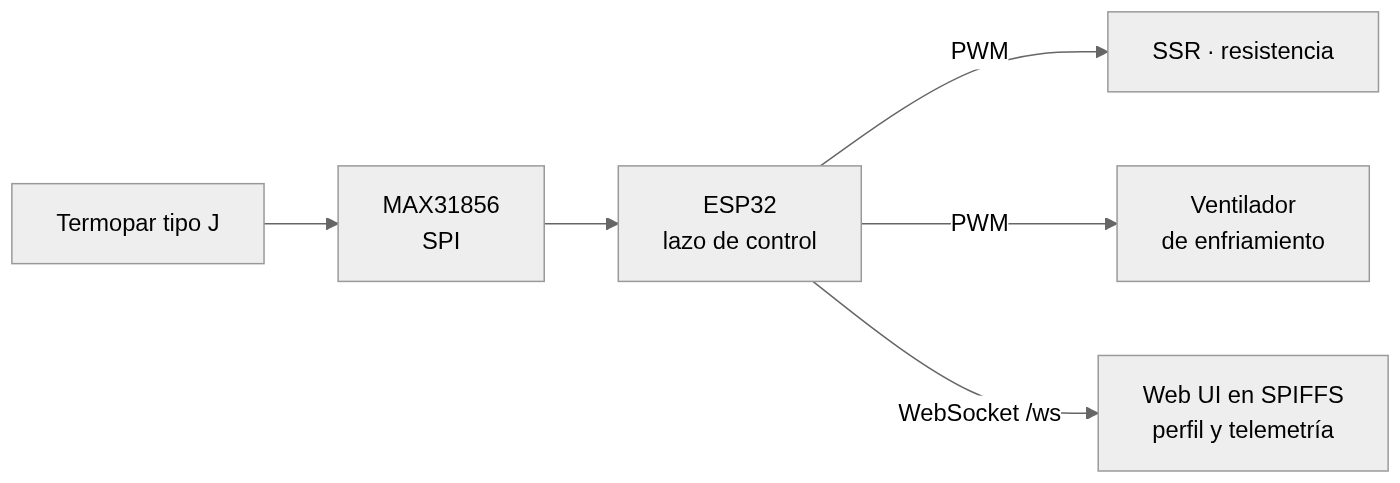
An ESP32-based controller that automates the heating and cooling cycles needed to reflow surface-mount components onto a PCB. It reads a J-type thermocouple through a MAX31856, drives the heating element through an SSR and the cooling fan through PWM, and exposes the whole thing as a web UI served straight off the ESP32’s SPIFFS with live telemetry over WebSockets.
Problem & Solution
A reflow station is an expensive piece of equipment for something that is, electrically, a temperature setpoint and a timer. The controller adds exactly that to an ordinary oven: set a target temperature and a maximum heating time from the browser, and watch the thermocouple curve come back live while the SSR and the fan do the work.
Technical Specifications
| Item | Detail |
| —————– | ——————————————————- |
| MCU | ESP32 (esp32doit-devkit-v1), PlatformIO |
| Temperature | Adafruit MAX31856 over SPI, J-type thermocouple |
| Heater control | SSR driven by PWM (pin 13) |
| Cooling | PWM fan (pin 27) |
| Interface | Web UI from SPIFFS, WebSocket telemetry on /ws, HTTP /toggle |
| Power | Separate supply for heater and fan — never off the 3.3 V rail |
The interface
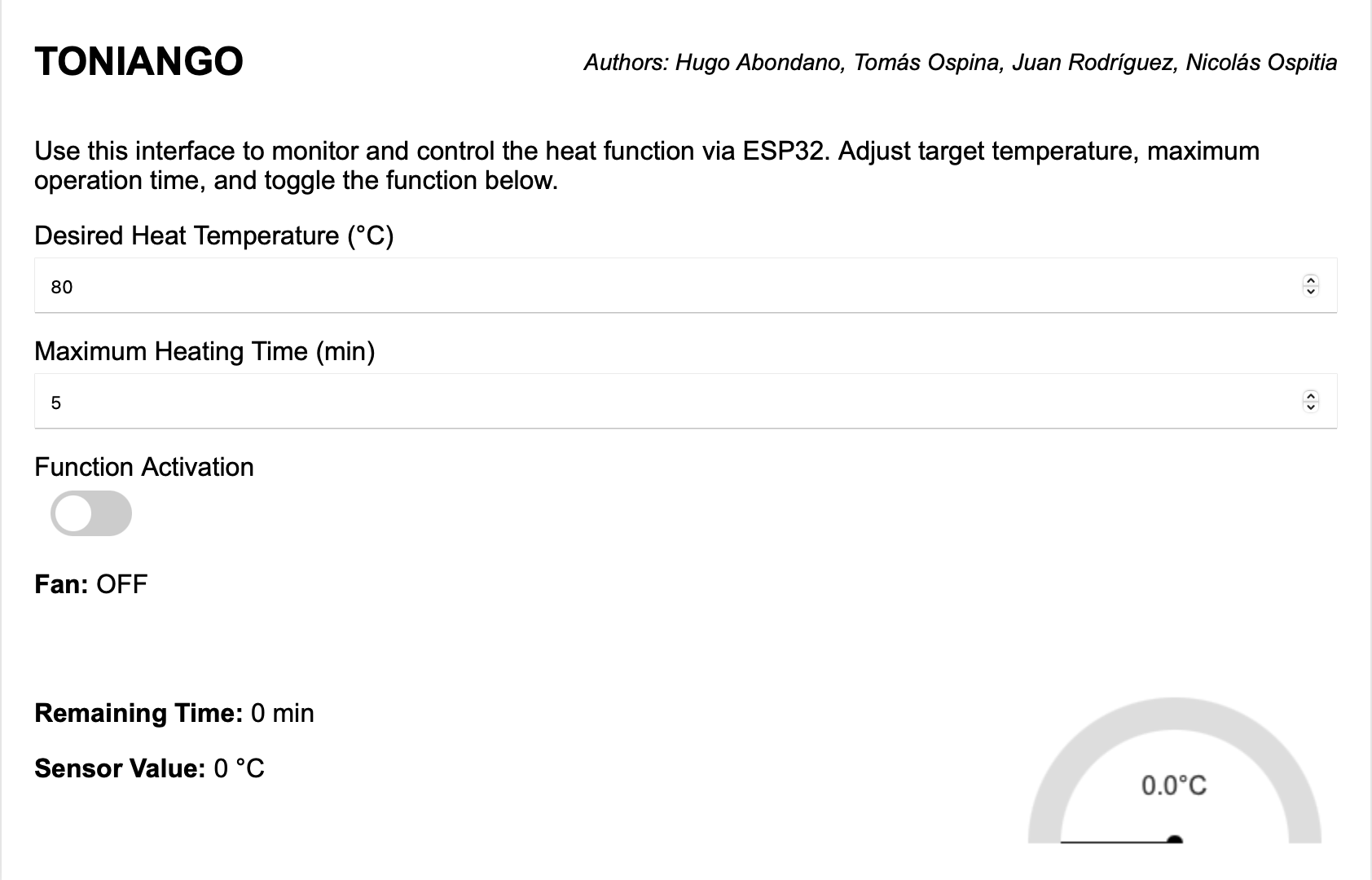
The whole control surface is a single page served from the ESP32’s own flash — set the target temperature and a maximum heating time, flip the toggle, and watch the thermocouple reading and the fan state come back live over the WebSocket.
My Role & Key Contributions
- Wrote the full firmware: SPI thermocouple driver, PWM control of the SSR and fan, and the WiFi/web server layer.
- Built the SPIFFS-hosted UI and the WebSocket telemetry channel that streams the temperature curve to the browser.
- Documented the wiring, the pin map and the electrical safety constraints in the repo.
What I Learned / Next Steps
The control loop is heuristic rather than a tuned PID, which is honest about what it is: good enough to reach and hold a setpoint, but it needs manual tuning per oven for a proper reflow profile. Closing that gap with a real PID and a multi-stage profile (preheat → soak → reflow → cooldown) is the obvious next step.